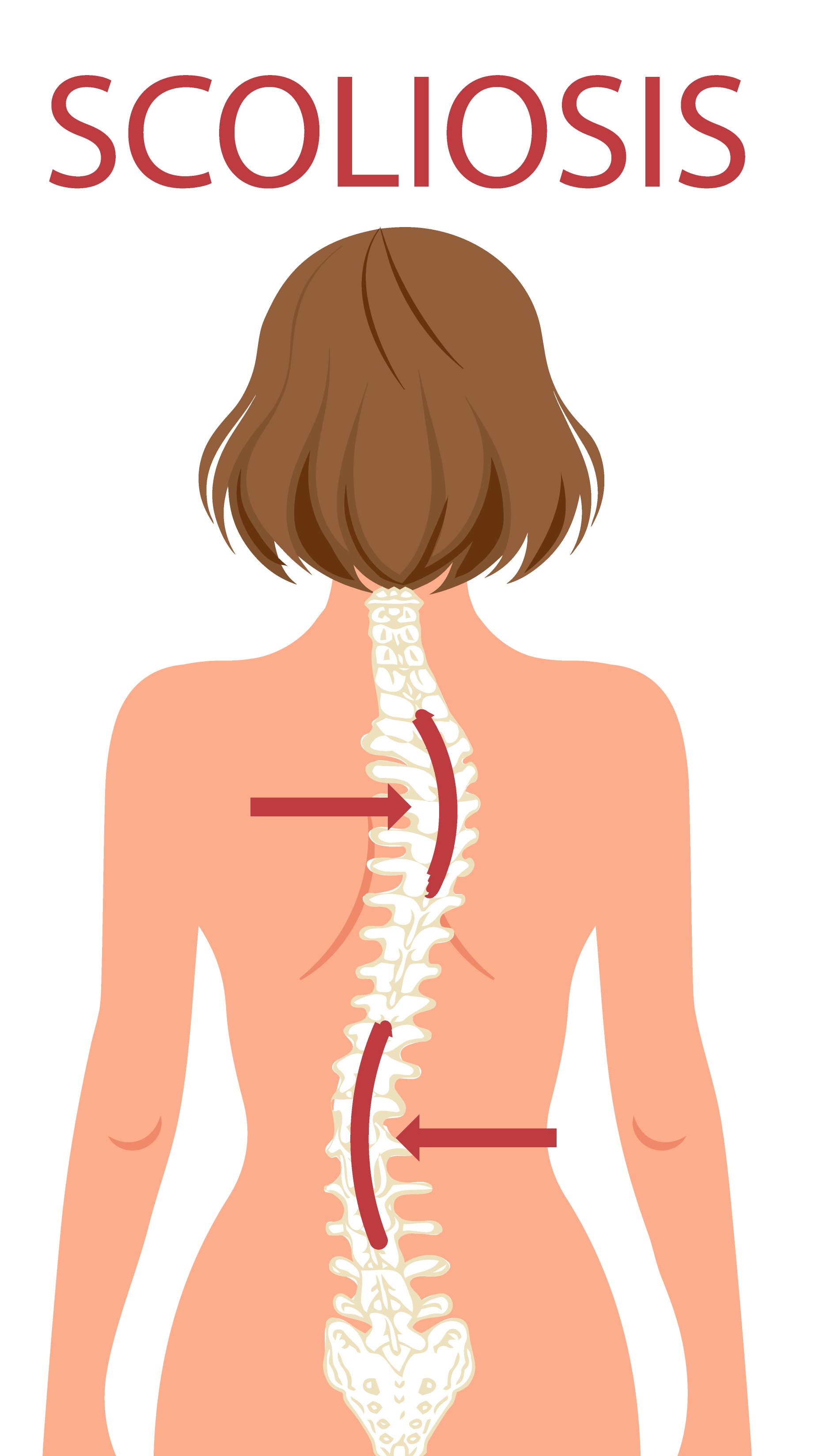
Scoliosis is a three-dimensional spinal deformity that involves abnormal sideways curvature and vertebral rotation. It may develop during adolescence or become more noticeable in adulthood because of degenerative spinal changes.
Scoliosis Correction is not a single procedure suitable for every patient.
The treatment approach depends on age, curve magnitude, skeletal maturity, progression, symptoms, and overall spinal balance.
For patients and families in Pune, Maharashtra, understanding these factors helps prevent unnecessary treatment decisions based solely on the appearance of the spine.
How Scoliosis Severity Is Measured
Standing spinal X-rays are commonly used to measure the Cobb angle, which describes the magnitude of the spinal curve.
The measurement helps specialists monitor changes over time.
However, the Cobb angle is only one part of assessment.
Other important considerations include:
- Age and remaining growth
- Curve location
- Curve flexibility
- Progression over time
- Trunk balance
- Pain and neurological symptoms
- Effects on daily activities
Two patients with similar curve measurements may require different treatment plans.
Understanding Scoliosis Correction Without Surgery
Observation is often appropriate for smaller, stable curves.
For growing adolescents with selected moderate curves, bracing may help reduce the risk of progression.
Bracing generally aims to prevent worsening rather than permanently straighten the spine.
Physiotherapy and scoliosis-specific exercises may support posture, muscle conditioning, and functional control.
Their role depends on the patient's age and curve characteristics.
Adult patients may benefit from strengthening, pain management, and treatment of associated degenerative problems.
When Surgical Correction May Be Recommended
Surgery may be considered for certain large or progressive curves, significant imbalance, neurological compression, or substantial functional impairment.
In adolescents, curve magnitude and progression risk are important considerations.
In adults, treatment decisions may focus more heavily on pain, nerve compression, disability, and spinal alignment.
Surgery is not automatically recommended because scoliosis is visible.
A specialist should explain why correction is being considered and what could happen with continued observation.
How Scoliosis Correction Surgery Works
Many surgical procedures involve spinal instrumentation and fusion.
Screws and rods help reposition and stabilise the spine.
Bone graft material supports fusion between selected vertebrae.
The number of spinal levels treated depends on the curve pattern and surgical plan.
Certain carefully selected younger patients may be eligible for alternative growth-modulating procedures, but these approaches are not suitable for every curve.
The aim is to improve alignment while maintaining safety and preserving appropriate function.
Understanding Surgical Risks
Scoliosis surgery is a significant procedure.
Possible complications include infection, bleeding, neurological injury, implant failure, failure of fusion, persistent discomfort, and additional surgery.
The degree of correction achieved varies according to curve flexibility, anatomy, and surgical safety considerations.
Patients should understand that cosmetic improvement is not the only treatment objective.
Recovery After Scoliosis Correction
Hospital recovery often includes pain management, assisted walking, breathing exercises, and gradual mobilisation.
Patients may resume light activities over the following weeks, depending on medical advice.
Return to school, desk work, sports, and physically demanding activities follows different timelines.
Bone fusion develops over several months, and restrictions may continue while healing progresses.
Follow-up imaging helps monitor alignment and implant position.
Frequently Asked Questions
Can scoliosis worsen after adulthood
Yes. Some adult curves can progress, particularly when degenerative changes affect spinal alignment.
Will surgery make the spine completely straight
Complete straightening is not always possible or necessary. Safe correction and balanced alignment are more important.
Can exercise replace scoliosis surgery
Exercise can support function but cannot reliably correct every structural curve.
Patients considering Scoliosis Correction in Pune may seek an individualised assessment from Dr. Rahul Chaudhari to understand whether monitoring, rehabilitation, bracing, or surgery is appropriate.
The most useful treatment plan is based on documented curve behaviour and the patient's actual clinical needs.
Keywords