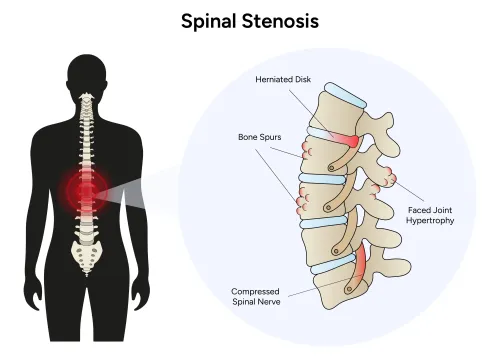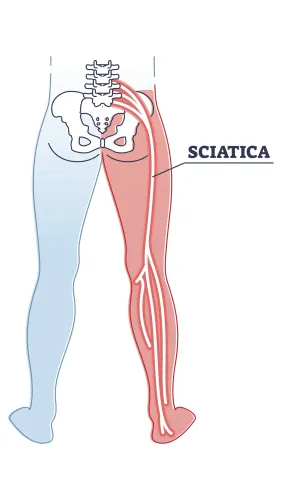
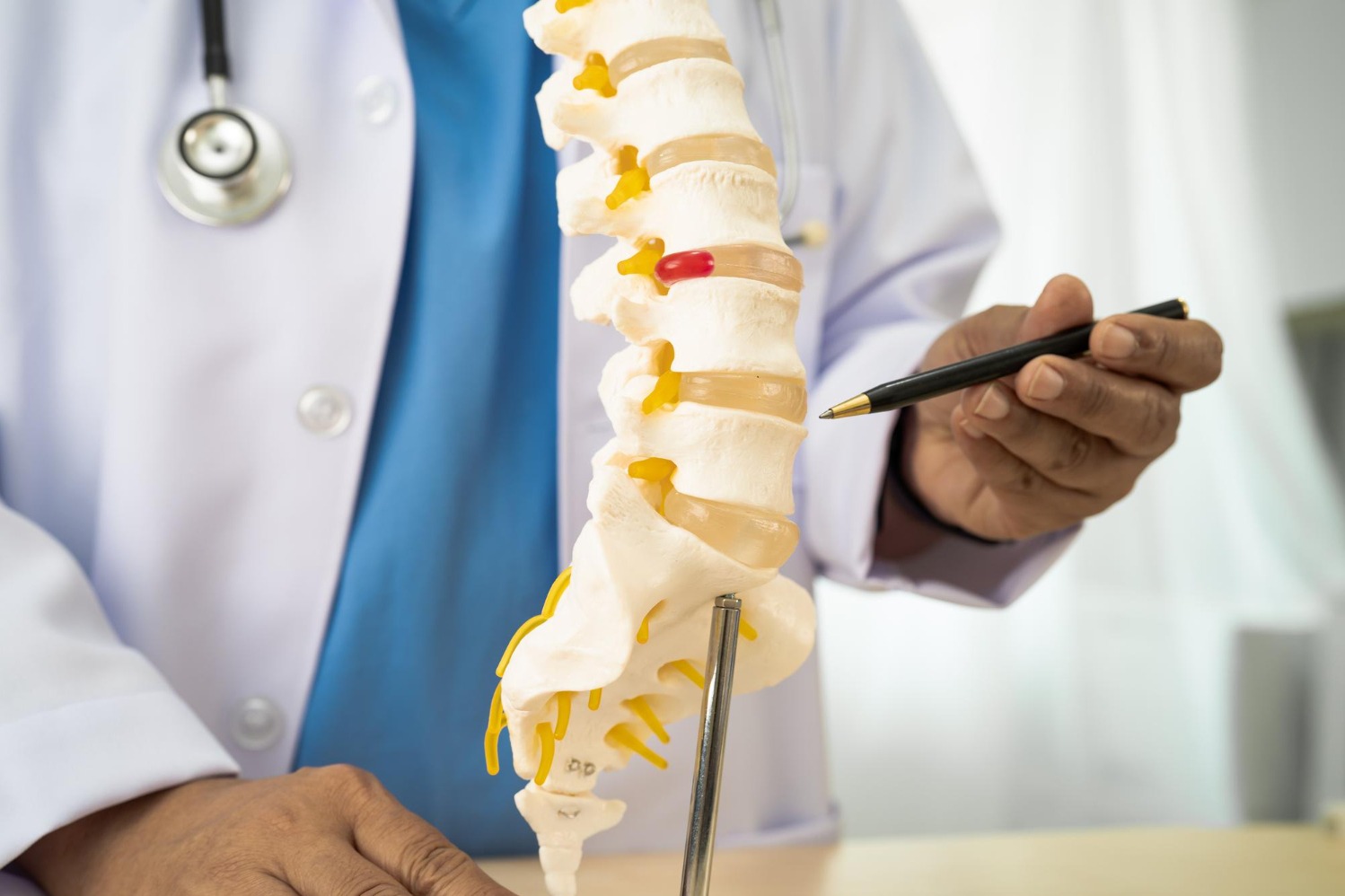
A Lumbar Slip Disc occurs when part of an intervertebral disc protrudes or herniates beyond its usual boundaries. If the displaced disc material irritates or compresses a nearby nerve root, it may cause lower back pain, radiating leg pain, numbness, or weakness.
Many lumbar disc herniations improve without surgery.
The important question is not simply whether a slipped disc appears on MRI, but whether it explains the patient's symptoms and requires a particular treatment.
Understanding the Difference Between Disc Bulging and Herniation
Disc bulging refers to a broader extension of disc tissue beyond its usual margins.
A disc herniation involves more localised displacement of disc material.
Both findings may appear on MRI, including in people without significant symptoms.
A Lumbar Slip Disc becomes clinically important when its location and effects correspond with pain, neurological changes, or functional limitations.
This distinction helps prevent treatment based on imaging alone.
When Conservative Treatment Is Appropriate
For patients without serious neurological deficits, initial management commonly includes conservative care.
Treatment may involve medication, physiotherapy, activity modification, and gradual return to normal movement.
The objective is to reduce pain while allowing irritated nerve structures to recover.
Many patients experience improvement over several weeks.
Repeated bending, heavy lifting, and prolonged positions that worsen radiating pain may need temporary modification.
Prolonged complete bed rest is generally not recommended.
When Should Surgery Enter the Discussion
Surgery may be considered when significant leg pain persists despite appropriate conservative treatment or when neurological weakness becomes concerning.
Emergency assessment is required for symptoms suggesting cauda equina syndrome, including new urinary retention, saddle numbness, or rapidly worsening neurological deficits.
For suitable disc herniations, lumbar microdiscectomy is a commonly performed operation.
The procedure removes disc material pressing on the affected nerve.
Its primary purpose is generally to relieve nerve-related leg pain rather than every form of lower back discomfort.
What Happens During Lumbar Disc Surgery
Microdiscectomy is performed under anaesthesia.
The surgeon accesses the affected spinal level through an incision and carefully removes the compressive disc fragment.
Microscopic or other magnification techniques may be used.
The procedure may be performed using conventional microscopic or selected minimally invasive approaches.
The choice depends on anatomy, disc location, surgical requirements, and the surgeon's assessment.
Benefits and Possible Complications
Patients with appropriately selected nerve compression may experience substantial improvement in radiating leg pain.
However, nerve recovery is not always immediate.
Long-standing numbness or weakness may take longer to improve and can sometimes persist.
Potential complications include infection, bleeding, dural tear, nerve injury, recurrent disc herniation, and persistent symptoms.
Surgery also carries general anaesthesia-related risks.
Recovery After Lumbar Slip Disc Surgery
Many patients begin walking shortly after an uncomplicated microdiscectomy.
Return to desk-based activities may be possible within a few weeks, while physically demanding work may require longer.
Recovery depends on the operation, preoperative symptoms, and occupational requirements.
Postoperative guidance commonly includes gradual walking, wound care, and temporary restrictions on strenuous lifting.
Rehabilitation should progress according to the treating team's instructions.
Questions to Ask Before Treatment
Patients in Pune considering Lumbar Slip Disc treatment should clarify:
- Which nerve is affected
- Whether symptoms match MRI findings
- What non-surgical options remain
- What improvement surgery is expected to provide
- How recurrence risk will be managed
- When normal work can resume
Can a Lumbar Slip Disc heal naturally
Symptoms often improve without surgery, and some herniated disc material may reduce in size over time.
Is surgery guaranteed to eliminate back pain
No. Surgery is generally more predictable for appropriately selected nerve-related leg pain than for nonspecific back pain.
Can the disc herniate again
Yes. Recurrent herniation is a recognised possibility.
Dr. Rahul Chaudhari provides spine consultations in Pune for patients seeking evaluation of lumbar disc conditions.
The decision to proceed with surgery should follow a clear explanation of the diagnosis, expected benefits, alternatives, and individual risks.
Keywords