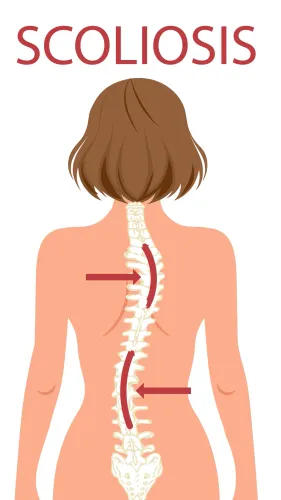
Scoliosis is an abnormal sideways curvature of the spine that can affect children, adolescents, and adults. Some curves remain mild, while others progress and influence posture, balance, movement, or daily comfort.
For families and adults in Pune and Maharashtra, understanding curve severity and progression is central to deciding what treatment is needed.
Understanding Scoliosis
Scoliosis can be idiopathic, congenital, neuromuscular, degenerative, or associated with other medical conditions.
Assessment may consider:
- Patient age
- Cobb angle
- Curve pattern
- Remaining growth
- Rate of progression
- Pain
- Neurological symptoms
- Spinal balance
Signs That Need Evaluation
Parents may notice uneven shoulders, unequal waist contours, a prominent shoulder blade, or asymmetry while bending forward.
Adults may experience back pain, reduced walking tolerance, imbalance, or nerve-related symptoms.
Treatment Based on Severity
Mild curves may simply require monitoring.
Growing children with selected curves may benefit from bracing. Physiotherapy can support posture, flexibility, strength, and daily function.
Surgery may be considered when a curve is severe, progressing, causing significant imbalance, or affecting function.
What Scoliosis Surgery May Involve
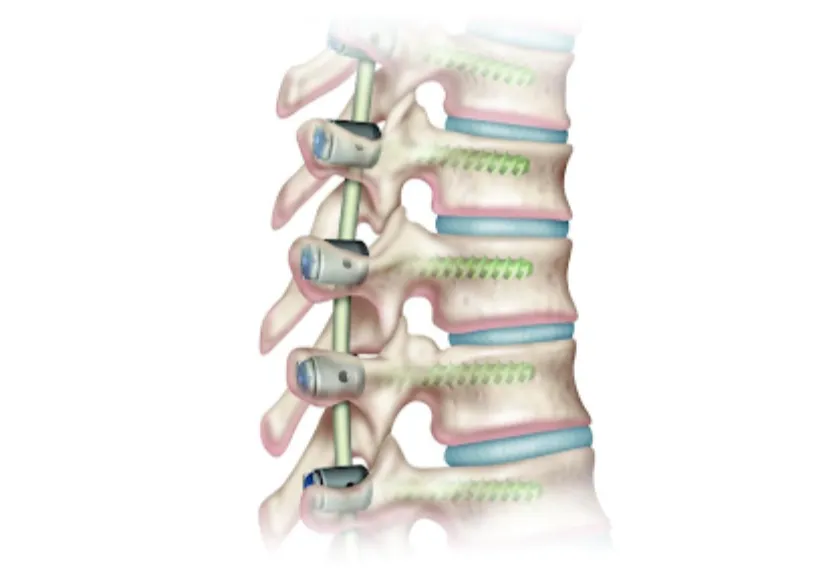
Surgery can involve partial correction of the curve and stabilization using implants and spinal fusion.
The goal is not necessarily a perfectly straight spine. Treatment aims to create safer alignment, improve balance, reduce progression, and protect neurological structures.
Potential Benefits
Potential benefits can include:
- Improved spinal alignment
- Better overall balance
- Reduced progression
- Improved daily function
- Greater postural stability
Possible Risks
Risks can include infection, bleeding, nerve injury, implant-related problems, non-union, persistent pain, and blood clots.
Scoliosis surgery is carefully planned because the complexity varies considerably between patients.
Preparing for Treatment
Preoperative assessment may involve standing spinal X-rays, MRI, blood tests, and medical evaluation.
Nutrition, diabetes, smoking, bone health, and previous medical problems may also need attention.
Recovery After Surgery
Walking usually begins under guidance after surgery. Return to school, office work, sports, and strenuous physical activity is gradual.
Bone fusion requires time, so restrictions may continue even after the patient begins feeling better.
Common Questions About Scoliosis
Does every curve become worse?
No. Progression depends on curve size, age, growth, and the type of Scoliosis.
Can adults develop scoliosis symptoms?
Yes. Degenerative spinal changes can lead to adult scoliosis.
Does every severe curve require surgery?
Treatment depends on progression, symptoms, balance, age, and overall health.
If you or your child has a noticeable spinal curve, uneven posture, or progressive back symptoms, an assessment with Dr. Rahul Chaudhari in Pune can help determine the severity and most appropriate treatment plan.
Keywords